




- Website -







 Current Location:
NEWS INFORMATION
Yuyuan Steel Structure
Key Design Considerations for Industrial Steel Structure Projects
AUTHOR:yuyuan DATE:2026-05-09 19:14:48 HITS:124
Industrial steel structures have gained widespread adoption in manufacturing plants, warehouses, logistics hubs and large-scale industrial facilities, owing to their outstanding mechanical strength, spatial flexibility and accelerated construction schedule. Nevertheless, the overall success of any steel structure construction project is fundamentally reliant on rigorous and scientific design planning. A meticulously optimized design scheme effectively guarantees structural safety, service durability, economic cost efficiency and sustained long-term performance throughout the building’s service life. Below are the core design considerations that engineers, architects and project stakeholders must comprehensively assess and validate prior to the commencement of an industrial steel structure project.


1. Load Analysis and Structural Safety Assurance
Accurate and comprehensive load computation stands as the most critical procedure in industrial steel structure design. The entire structural system must be engineered to safely resist all anticipated static and dynamic loads, encompassing:
Dead load: the self-weight of steel members, roof panels, wall claddings and fixed auxiliary facilities
Live load: equipment loads, stored cargo, operating personnel and movable construction loads
Wind load: a pivotal design factor for large-span and high-rise steel structures
Snow load: mandatory consideration for projects in cold and heavy snowfall regions
Seismic load: strict calculation and reinforcement for structures in seismic zones
Standardized load analysis and checking effectively eliminate structural deformation, instability and failure risks during the service period, laying a solid foundation for operational safety.
2. Building Functionality and Operational Usage Requirements
Diverse industrial application scenarios demand targeted structural design schemes. Typical differentiated demands include:
Manufacturing workshops often require integrated crane beam systems for heavy-duty lifting operations
Warehouses prioritize large clear spans and open internal spaces to enhance storage and logistics efficiency
Power generation facilities demand enhanced load-bearing capacity for heavy mechanical equipment
Logistics distribution centers call for flexible spatial layouts to accommodate future business expansion
A thorough understanding of the building’s functional positioning provides a clear basis for determining column spacing, clear height, structural form and auxiliary component configuration.
3. Rational Selection of Structural Systems
Selecting the optimal structural system is vital for balancing structural performance and project cost control. Commonly applied industrial steel structure systems include:
Portal frame structures: the preferred choice for standard warehouses and production workshops
Steel truss systems: suitable for super large-span buildings with high load-bearing demands
Space frame structures: widely used in stadiums, airports and large public industrial facilities
Multi-story steel frame structures: applicable to high-rise industrial plants and comprehensive industrial buildings
Each system features unique mechanical properties and economic benefits, and the final selection depends on building span, design load, budget limit and construction conditions.
4. Material Selection and Steel Quality Control
Steel material quality directly determines the safety performance and service life of the entire structure. Designers must prioritize the following indicators:
Steel grade, yield strength and tensile strength compliance with design codes
Corrosion resistance performance matching the service environment
Weldability, machinability and prefabrication adaptability
Surface anti-corrosion treatment (galvanization, special coating or anti-rust painting)
Adopting high-quality qualified steel materials improves structural durability, reduces later maintenance costs and extends the overall service life.
5. Foundation Design and Geological Condition Assessment
The stability of a steel structure is entirely dependent on a reliable foundation system. Prior to construction, comprehensive geological survey and analysis are mandatory, focusing on:
Soil bearing capacity and foundation settlement characteristics
Groundwater level and seepage impacts
Geological hazards such as uneven settlement and soil liquefaction
Local geological and topographic conditions
Based on survey results, engineers select appropriate foundation forms, including isolated footings, strip foundations, pile foundations or raft foundations, to avoid foundation failure.
6. Environmental and Climate Adaptability Design
Local natural environment and climatic conditions impose decisive constraints on structural design details:
High wind velocity regions require enhanced bracing and wind resistance systems
Coastal and high-humidity areas demand specialized anti-corrosion and salt-fog resistance measures
Cold regions require strict snow load checking and snow removal auxiliary design
High-temperature areas need reserved thermal expansion gaps to avoid thermal deformation
Targeted environmental adaptability design effectively maintains long-term structural stability and reduces climate-induced damage.
7. Fire Resistance and Fire Safety Design
Industrial steel structures must strictly comply with local fire safety codes and regulations. Key fire protection considerations include:
Application of fireproof coatings or fire-resistant protective materials on steel members
Reasonable layout of emergency evacuation routes and fire passages
Setting of fire separation zones and fire compartmentation
Full compliance with national and local fire protection design standards
Although steel is a non-combustible material, its mechanical strength declines sharply under high temperatures, making reliable fire protection an indispensable part of design.
8. Corrosion Protection and Durability Enhancement
Steel is susceptible to corrosion in harsh environments, which severely weakens structural bearing capacity. Effective anti-corrosion measures mainly include:
Hot-dip galvanizing for long-term anti-corrosion performance
Multi-layer anti-corrosion paint systems suitable for different environments
Weather-resistant steel and specialized anti-corrosion coatings
Formulation of regular corrosion inspection and maintenance plans
Scientific corrosion protection can substantially extend the service life of steel structures and reduce full-life-cycle costs.
9. Expandability and Future Modification Flexibility
Industrial buildings frequently face functional adjustment and capacity expansion demands. Designers should incorporate scalability in the initial scheme:
Adoption of modular and standardized design systems
Flexible column spacing and layout to facilitate later reconstruction
Reserved interfaces for additional floors, span extensions and equipment upgrades
Convenient integration of new production and logistics equipment
A scalable and flexible design significantly cuts down future renovation and expansion expenses.
10. Cost Optimization and Construction Efficiency Improvement
Balancing structural performance and project investment is a core goal of design optimization. Engineers can achieve cost efficiency through the following approaches:
Optimizing section design to reduce redundant steel consumption
Utilizing standardized prefabricated components to lower processing costs
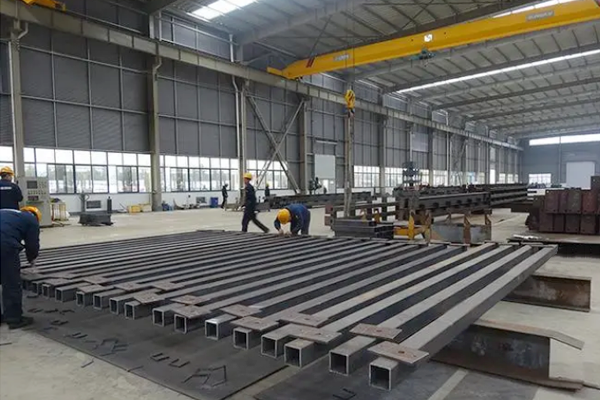
Maximizing factory prefabrication to improve component quality
Simplifying on-site construction procedures to shorten the construction period
Efficient design optimization reduces both material and labor costs while ensuring structural safety and performance.
Conclusion
The design of industrial steel structures demands comprehensive consideration of multiple interrelated factors, including scientific load analysis, functional demand matching, high-quality material selection, environmental adaptation, fire and corrosion protection, future expandability and cost optimization. A well-designed scheme not only ensures structural safety and long-term durability but also significantly boosts construction efficiency and reduces full-life-cycle operating costs. Backed by professional engineering design and high-quality steel materials, industrial steel structures deliver stable and reliable performance for decades, consolidating their status as one of the most efficient and practical building solutions in modern industrial construction.
References
GB/T 7714:Specification for Structural Steel Buildings. American Institute of Steel Construction
MLA: Optimization design of large span portal-rigid steel frame with tapered sections under wind-induced drift constraint. Engineering Structures
APA:An efficient coupled numerical method for reliability-based design optimization of steel frames. Journal of Constructional Steel Research
-
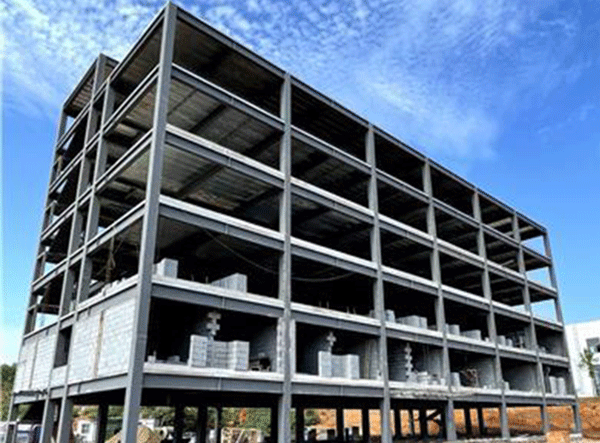
Fast Assembled Multi-Story Steel Structure Workshop Factory For Industrial Use
-
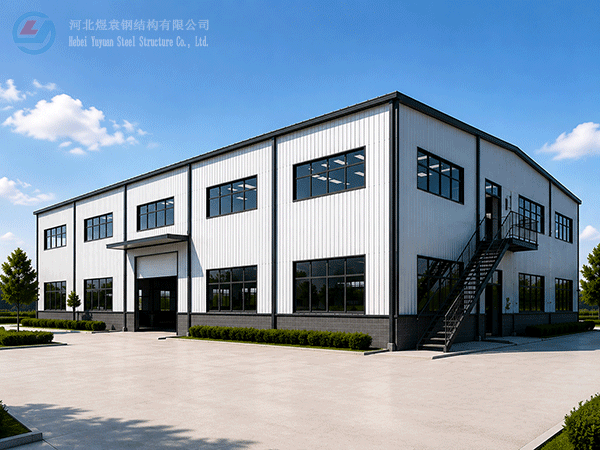
Modern Two-Storey Prefabricated Steel Structure Workshop Building Industrial Shed Construction
-

Yuyuan export Steel Structure Warehouse Prefab Steel Structure Warehouse for storage
-
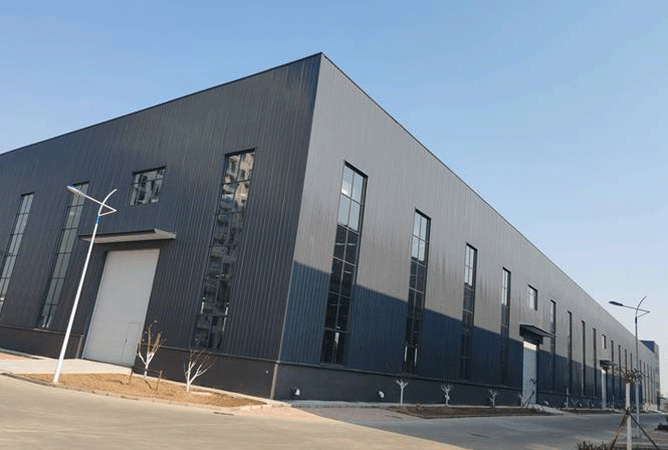
Export steel structure workshops Prefabricated steel structure workshops Light steel structure war
-
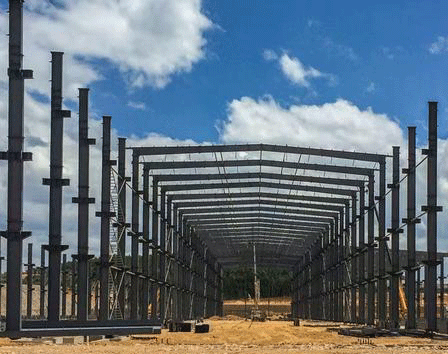
High Quality Low Cost Prefabricated Steel Structure Industrial Warehouse Shed
-

Xiao Sheng - Maldives
-

Xiao Sheng - Maldives
-

Xiao Sheng - Maldives
Hebei Yuyuan Steel Structure Co., Ltd.
Copyright © 2024-2025 https://www.yysteelwarehouse.com. All Rights Reserved Hebei Yuyuan Steel Structure Co., Ltd. All Rights Reserved.